Price Chart and Segments, our first two generally available MCP Apps, bring S&P Global data to life inside AI applications as interactive charts and tables, all without leaving the conversation.
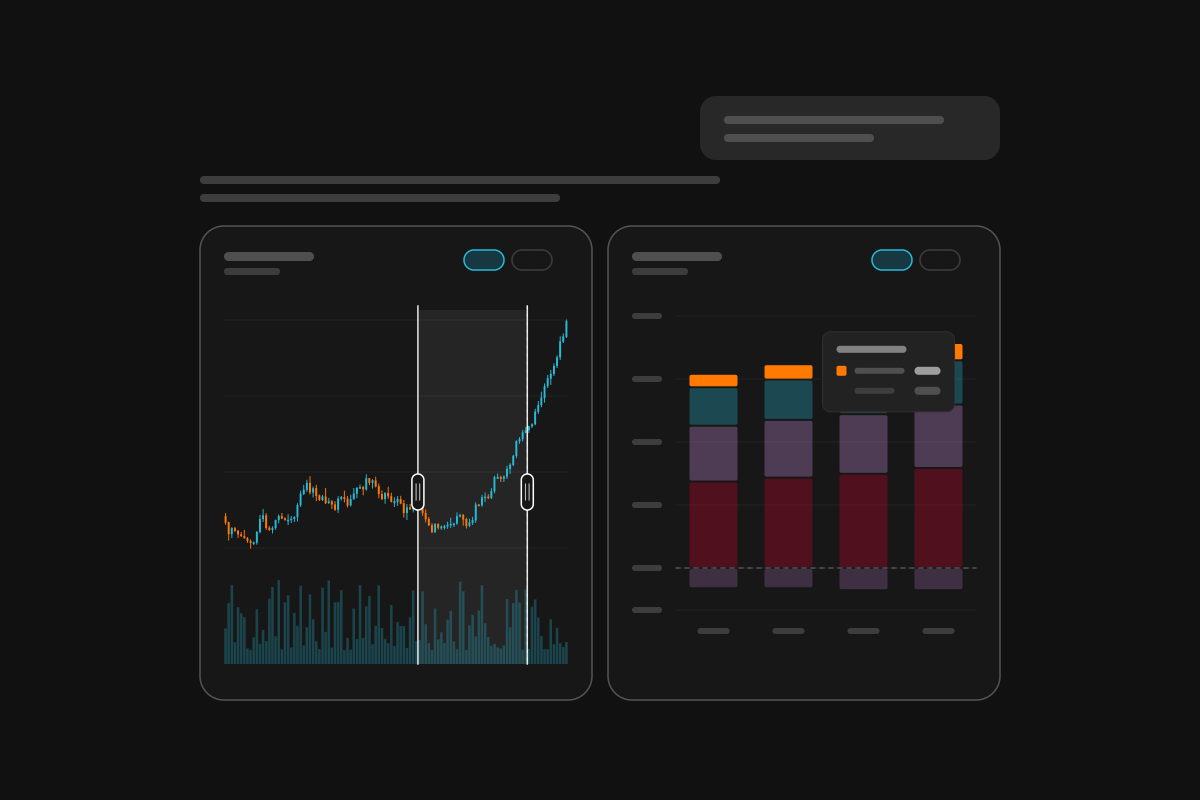
We introduced Kensho MCP Apps in beta in May. Since then, customers have used them in their research and AI workflows, and their feedback shaped how we iterated and what we’re making widely available. Today, Price Chart and Segments are integrated directly into the S&P Global AI Data Portal, available to customers who use the solution.
Analysts do much of their thinking before they build a financial model or a deck, as they test assumptions and develop a thesis. Increasingly, early research happens by asking questions of an AI agent such as Claude. But most AI applications return answers as plain text. Kensho MCP Apps turn the data behind the agent’s answer into charts and tables analysts can explore. And because the charts and tables render directly in the app, the AI model doesn’t have to work through as much data to present them. That can mean fewer tokens, lower cost, and faster answers.
When an AI agent retrieves S&P Global data through the AI Data Portal, the apps display that data in the chat, alongside the agent’s response, with controls to explore it. Analysts can change a date range, switch metrics, or compare periods without re-prompting the agent or leaving the conversation. Find more information about each app below.
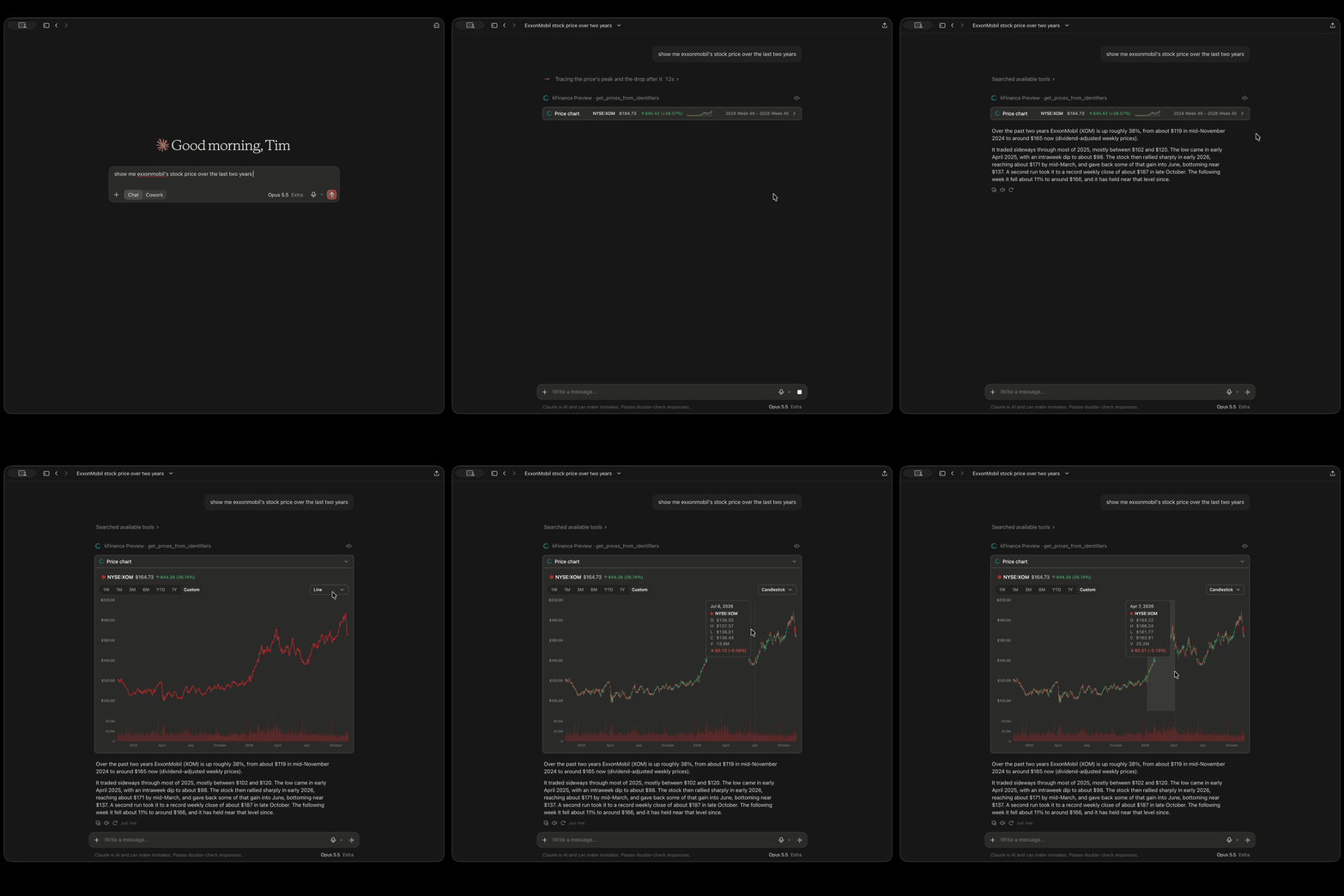
Price Chart: Explore historical stock prices and trading volume, choose date ranges, and select intervals to investigate market moves.
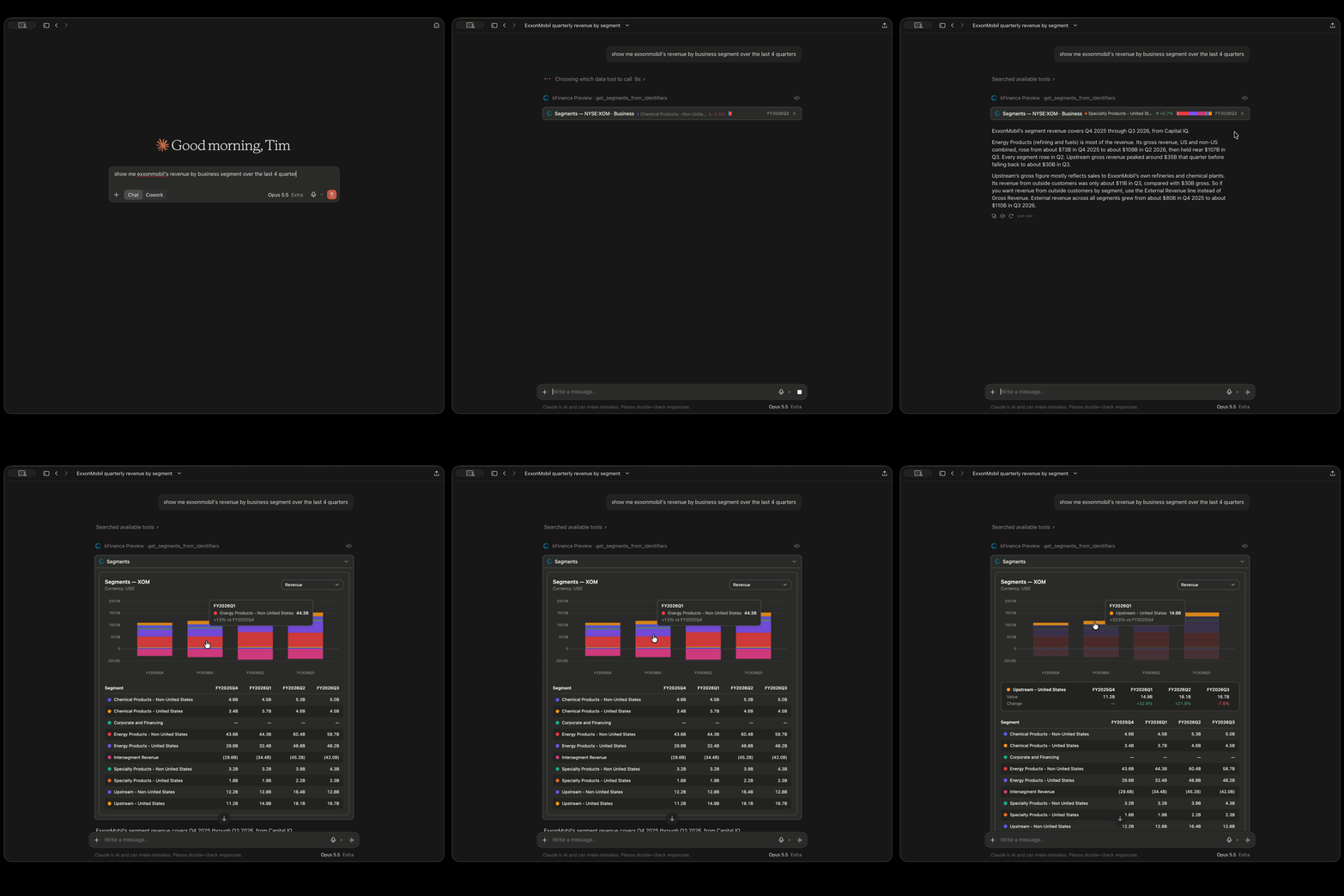
Segments: Break down a company’s business and geographic segments in charts and tables. Switch available metrics and compare performance across reporting periods.
Both apps work through a customer’s existing Deterministic Retrieval MCP connection, starting in Claude. Access follows each customer’s dataset entitlements, with no separate connector to set up.
In beta, customers told us what they needed from the apps themselves:
UI/UX consistency: Each app keeps the same finance-specific layout and controls from one request to the next, filled with the data the agent just retrieved.
Fewer tokens, fewer errors: The agent doesn’t have to write new chart code or retype figures for each visualization, so it uses fewer tokens, saves cost, and has fewer chances to introduce an error.
Because MCP Apps run through the same Deterministic Retrieval connection and entitlements, new apps become available to customers without any additional setup. Over the coming months, we'll continue to enhance these apps and develop additional ones, including with more customizable outputs and coverage across more of the data and workflows analysts rely on.
To learn more about Deterministic Retrieval, visit S&P Global Marketplace or read the MCP integration documentation. For sales and marketing questions, contact commercial@kensho.com. For product questions, contact tim.baker@kensho.com.